Mobility
The Best Mobility Exercises for Everyday Movement
A few minutes of simple mobility work most days can help you move more freely, feel looser and get more out of your training. Here are the best moves to start with.
The short answer
- The best mobility exercises open up the areas most people get tight: the hips, the upper back, the ankles and the shoulders. Simple moves like hip circles, the world's greatest stretch, cat-cow, ankle rocks and shoulder rolls, done for a few minutes most days, help you move more freely and feel better in everyday life and training.
- Mobility is how well you can move a joint through its range with control. Flexibility is just how far a muscle can lengthen. Mobility is the more useful goal for everyday movement.
- You do not need long sessions. Five to ten minutes on most days beats a rare long stretch.
- With Edge, mobility is genuinely built into every plan, with coach video demos for the general moves so you always know what good looks like.
5 to 10 min
A useful daily dose of mobility
Most days
Little and often beats rare and long
4 key areas
Hips, upper back, ankles and shoulders
What are the best mobility exercises?
The best mobility exercises open up the areas most people get tight: the hips, the upper back, the ankles and the shoulders. Simple moves like hip circles, the world's greatest stretch, cat-cow, ankle rocks and shoulder rolls, done for a few minutes most days, help you move more freely and feel better in everyday life and training.
You do not need a long list. A handful of moves that cover the main areas will do far more than a complicated routine you never actually do. Sitting for long stretches, standing all day and repetitive movement all tend to leave the same joints feeling stiff, so a short, well-chosen routine targets those spots and helps you feel looser in daily life.
Move slowly and stay in a comfortable range. Mobility work should feel like gentle opening, not a fight. If a movement causes sharp pain, ease off and see a professional such as a physio.
| Exercise | Area it helps | How to do it |
|---|---|---|
| Hip circles or 90-90 | Hips | Circle one knee slowly through a wide range, or sit with both knees bent at 90 degrees and rotate gently from side to side. |
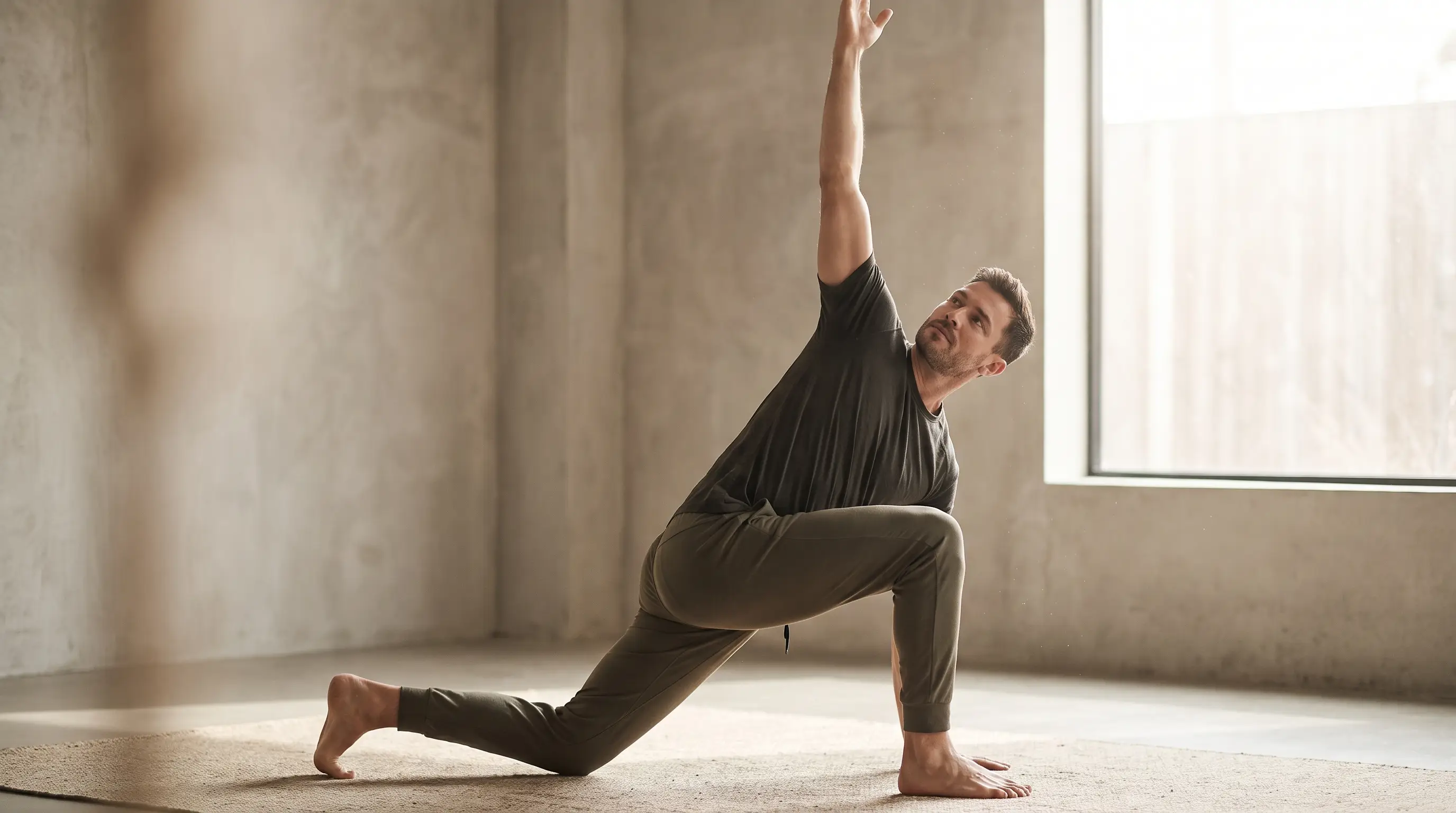
| World's greatest stretch | Hips and spine | From a lunge, place your hands down, then rotate your chest open towards the front knee and reach one arm to the ceiling. |
| Cat-cow | Spine | On all fours, slowly arch your back and look up, then round it and tuck your chin, moving smoothly with your breath. |
| Ankle rocks | Ankles | In a half-kneeling or standing position, gently rock your knee forward over your toes and back, keeping your heel down. |
| Shoulder rolls or wall slides | Shoulders | Roll your shoulders in slow circles, or stand with your back to a wall and slide your arms up and down while keeping contact. |
| Thoracic rotations | Upper back | On all fours or seated, place one hand behind your head and rotate your elbow up and open, following it with your eyes. |
Aim for a handful of slow, controlled reps of each, breathing steadily. There is no need to rush. A few good repetitions where you feel the area gently opening are worth more than many quick ones.
What is the difference between mobility and flexibility?
Flexibility is how far a muscle can lengthen or stretch. Mobility is how well you can actively move a joint through its range with control and strength. In simple terms, flexibility is passive length, while mobility is usable movement you can call on when you need it.
A quick example helps. Someone might be able to have their leg lifted high by a partner, which shows good flexibility, yet struggle to lift that same leg high on their own with control. That gap is a mobility gap. For everyday movement and training, mobility is usually the more useful goal, because it is the range you can actually use when you squat down, reach overhead or twist to look behind you.
The good news is that the moves above build both. They take joints through a controlled range, which improves how freely you move while also gently lengthening the muscles around each joint.
How often should you do mobility work?
Little and often works best. Five to ten minutes on most days will do more for how you move than one long session now and then. Mobility responds well to gentle, regular practice, so consistency matters more than intensity.
You can slot it in wherever it fits. Some people run through a few moves first thing in the morning to loosen up, others use them as a warm up before training, and some do a short round in the evening to unwind. There is no single right time. The best routine is the one you will actually keep doing.
If you only have a couple of minutes, pick the one or two areas that feel tightest that day and focus there. A small amount done regularly adds up quickly.
Can mobility work help your training?
Yes. Better mobility helps you get into stronger, more comfortable positions in your training. Freer hips and ankles make squats and lunges feel more natural, and a more mobile upper back and shoulders help with overhead and pressing movements. When you can reach a good position more easily, your technique tends to feel smoother.
A short mobility warm up before a session can also help you feel more ready to move, and gentle mobility on rest days can help you feel looser between workouts. It will not cure pain or guarantee you avoid injury, but it does help you move more freely and feel better day to day, which supports your training over time.
If you have ongoing pain, a past injury or a health condition, treat mobility work as general movement, not treatment, and speak to a professional such as a physio for guidance tailored to you.
How do you start a simple mobility routine?
Start small and keep it simple. Pick one move for each main area, so one for the hips, one for the upper back, one for the ankles and one for the shoulders. Do a handful of slow, controlled reps of each, breathing steadily and staying in a comfortable range. That is a complete beginner routine in well under ten minutes.
Attach it to something you already do, such as after brushing your teeth or before your workout, so it becomes a habit. Once it feels easy, you can add a second move for any area that feels especially tight, or spend a little longer where you need it most. The aim is steady, gentle progress rather than pushing hard.
If you would rather not build a routine from scratch, a plan that includes mobility for you takes the guesswork away, so you can simply follow along and know you are covering the right areas.
Train with Edge
A fully personalised plan across running, strength, HIIT and mobility, ready within a day. Message a real coach anytime.
How Edge builds mobility in
With Edge, you get a fully personalised training plan, ready within a day, and you can message a real coach anytime. One plan covers running, strength, HIIT and mobility, so mobility is not an afterthought you have to remember on your own. It is genuinely built into every plan, with coach video demos for the general moves so you always know what good movement looks like.
Edge focuses on general mobility and movement rather than injury-specific rehab, and the plan flexes around your life so it fits the time you actually have. More than 18,000+ members use Edge to train in a way that feels good, not overwhelming. There is a free 7-day trial, then plans start from £19.99 per month. If you have pain, an injury or a health condition, please see a professional such as a physio for guidance made for you.